
Self-Care Tips for Emotional Recovery After an Accident
Recovering emotionally after a car accident can be challenging, even if you're physically unharmed. Anxiety, fear, PTSD, and depression are common reactions, but taking deliberate steps toward self-care can significantly aid your healing process. Here's what you need to know:
- Emotional Impact: Many survivors experience anxiety, fear of driving, flashbacks, or guilt. Recognizing these feelings is the first step toward recovery.
- Self-Care Strategies: Techniques like mindfulness, breathing exercises, and journaling can help manage stress and promote emotional balance.
- Healthy Routines: Regular physical activity, consistent sleep schedules, and proper nutrition support mental and physical recovery.
- Gradual Exposure: Slowly returning to driving with a structured plan can help rebuild confidence.
- Seek Support: Talking to loved ones or professionals can ease emotional burdens, while expert help can simplify insurance claims and repairs.
Recovery takes time, patience, and small, consistent efforts. Focus on self-compassion and celebrate progress, no matter how small. If tasks like insurance claims feel overwhelming, knowing what to do after a car accident consider professional assistance to lighten the load and prioritize your well-being.
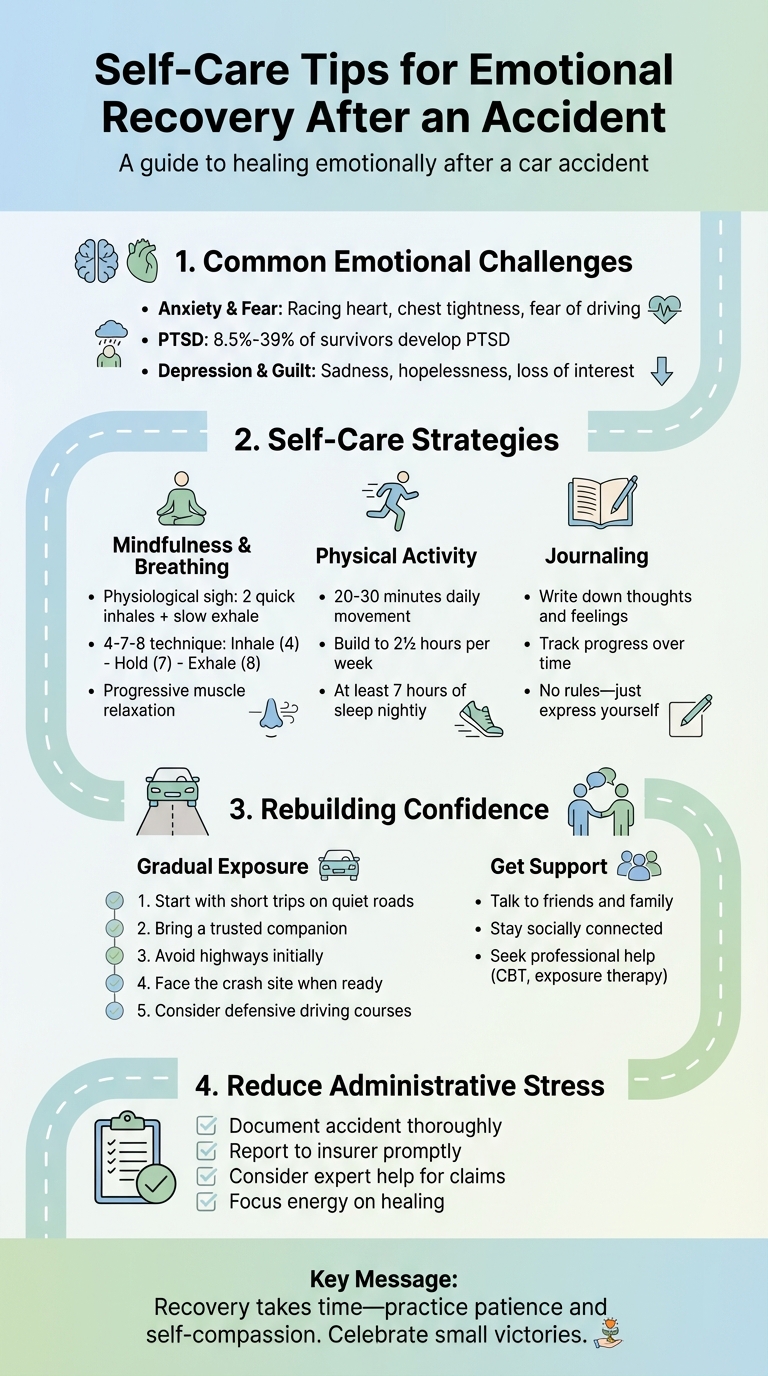
Self-Care Strategies for Emotional Recovery After Car Accidents
PTSD Car Accident (How to Recover!)
sbb-itb-6a9d141
Common Emotional Challenges After a Car Accident
Recovering emotionally after a car accident can be just as important as healing physically. While the visible injuries are easier to spot, the emotional toll often lurks beneath the surface. Recognizing these feelings as part of the healing process can help you navigate the road to recovery. Let’s break down some of the most common emotional challenges and how they might affect you.
Anxiety and Fear
It’s not unusual for survivors to feel a heightened sense of fear when it comes to driving or even riding in a car after an accident. This anxiety can show up in physical ways, like a racing heart, chest tightness, headaches, or stomach discomfort. Some might even feel dizzy or on edge when they’re back on the road. Everyday sounds - like a siren or screeching tires - can trigger intense reactions.
For many, this fear can make it difficult to maintain independence. Activities like commuting to work, running errands, or taking care of family responsibilities may start to feel overwhelming.
PTSD and Emotional Trauma
For some, the emotional impact goes beyond fear and enters the realm of post-traumatic stress disorder (PTSD). This condition can make survivors feel as though they are reliving the accident, often through flashbacks or nightmares triggered by specific reminders. Statistics show that anywhere from 8.5% to 39% of car accident survivors develop PTSD.
PTSD doesn’t just affect your thoughts - it can impact your entire life. You might feel constantly on edge, have trouble focusing, or even pull away from loved ones. Some people experience emotional numbness or struggle to recall details of the accident. For a formal PTSD diagnosis, these symptoms must last for at least 30 days and interfere with daily life.
As Holly Sigsbee, LMHC, a mental health counselor, explains:
accepting these emotions rather than suppressing them can facilitate the healing process.
Depression and Guilt
Feelings of sadness, hopelessness, and guilt are also common after a car accident. Depression can drain your energy, make you lose interest in things you once enjoyed, and even affect your ability to care for yourself or maintain relationships.
Guilt often walks hand-in-hand with these emotions, especially if the accident caused harm to others. Survivors may replay the event in their minds, blaming themselves and feeling a deep sense of worthlessness.
Robert Jenkins, Esq., an attorney and adjunct professor, captures this sentiment well:
auto collisions can be emotionally devastating, even if you and your passengers don't suffer serious physical injuries.
Depression can also manifest physically, leading to fatigue or sleep issues. Recognizing these emotional hurdles is the first step toward addressing them. The upcoming sections will explore strategies for self-care and recovery. For more information on navigating the aftermath of a crash, see our car accident guides.
Self-Care Strategies for Emotional Recovery
Once you've identified the emotional hurdles you're facing, the next step is to actively work on your recovery. Simple, practical techniques can help you regain a sense of calm and control. The best part? These strategies don’t require fancy tools or professional training - just a commitment to care for yourself during a challenging time.
Mindfulness and Breathing Techniques
Your breath is a powerful tool for managing post-accident anxiety. As Paula O'Neill, R.N., explains:
"Breathing is with us all the time, it's free, and we can implement different techniques to help destress in the moment."
One effective method is the physiological sigh: take two quick inhales through your nose, followed by a slow exhale through your mouth. This technique activates your parasympathetic nervous system, signaling your brain that you’re safe and calming the "fight or flight" response.
If you’re struggling to relax, especially at bedtime, try the 4-7-8 breathing technique. Inhale through your nose for a count of four, hold your breath for seven counts, and then exhale slowly through pursed lips for eight counts. This rhythmic breathing can help quiet racing thoughts and bring a sense of calm when you need it most.
Another helpful approach is progressive muscle relaxation (PMR), which involves tensing and then releasing different muscle groups. Start with your toes - tense them for a few seconds, then release and notice the relief. Gradually move through your body, focusing on each area, from your legs to your face, letting go of built-up tension.
For moments when intrusive thoughts or flashbacks overwhelm you, grounding techniques can help. Place your bare feet on the ground (a practice called "earthing") or focus on physical sensations, like the texture of an object or the breeze on your skin. These actions anchor you in the present moment and can help reduce emotional distress.
Pair these mindfulness practices with physical activity to further support your recovery.
Physical Activity and Healthy Routines
Daily movement can be incredibly beneficial for trauma recovery. You don’t need to go all out - even 20 to 30 minutes a day can make a noticeable difference. The CDC encourages building up to 2½ hours of activity per week, emphasizing:
"Every little bit helps. Start small and try to build up to 2½ hours a week."
Activities like walking, dancing, or light yoga are great ways to ease into a routine.
Consistency is also key. Establishing regular routines - such as set times for waking up, eating, and sleeping - can bring a sense of stability when life feels chaotic. Predictable routines help regulate your nervous system, giving you a sense of control. As Wellbeing Magazine points out:
"Rest is not optional. Your immune system, nervous system, and musculoskeletal system all need downtime to reset."
Aim for at least seven hours of sleep each night. To improve sleep quality, avoid caffeine after 2:00 p.m., limit screen time before bed, and keep your bedroom cool and dark. If insomnia persists, a weighted blanket may help by providing deep pressure touch therapy, which can calm your nervous system.
These small, daily choices can help you regain control over your life. A steady routine also creates space for reflective practices like journaling.
Journaling and Expressive Writing
In addition to physical and mindfulness strategies, journaling can be a powerful way to process your emotions. Writing down your thoughts allows you to externalize them, making it easier to work through challenging feelings.
Keep a notebook by your bed for those nights when thoughts about the accident keep you awake. Writing them down can clear your mind and help you drift back to sleep.
You don’t need to worry about grammar or structure. The goal is simply to express what you’re feeling and experiencing. Over time, your journal can become a record of your progress, offering a reminder of how far you’ve come - even on days when it feels like recovery is moving slowly.
Rebuilding Confidence and Facing Fears
Restoring confidence after an accident takes time, patience, and a mix of self-care, gradual exposure, and support from others.
Getting back behind the wheel can feel daunting. Fear, anxiety, or even guilt are common reactions. As Kenneth Reinhard, Ph.D., a board-certified clinical psychologist, explains:
Within a month, these normal reactions will usually start to subside.
The key is to approach this process with a structured plan and a focus on steady progress.
Gradual Exposure to Driving
Taking small steps to resume driving is essential. Prolonged avoidance can amplify anxiety. Think of it like an athlete easing back into training after an injury - start slow and build up gradually.
Begin by having a trusted person accompany you on your first few drives. This creates a sense of security if anxiety arises. Start with short trips on quiet, familiar roads . Avoid jumping straight into high-stress situations like highways or rush-hour traffic until you feel more comfortable .
Facing the crash site is also important. Avoiding it might seem easier, but it can make your anxiety worse over time. Edward Hickling, Psy.D., co-author of After the Crash, advises:
Changing your route or slowing your speed because you feel nervous is counterproductive. You're feeding the anxiety.
Another helpful step is enrolling in a defensive driving course. These classes not only enhance your driving skills and help you handle risky situations but can also lower your insurance costs . If your vehicle was destroyed, understanding the total loss dispute process can also reduce financial stress.
As you work on regaining your driving confidence, leaning on the support of others can make the journey smoother.
Getting Support from Others
Support from friends, family, or professionals can play a big role in recovery. Talking about your experience with trusted people can help ease the emotional burden . Focus on the positive - remind yourself that you survived and are safe. This can help reduce intrusive thoughts .
Even if you're not ready to talk about the accident in detail, staying socially connected is important. Isolation can slow down recovery, so keep spending time with loved ones and participating in your usual activities. When you're ready, discussing challenges with others can help you find solutions that feel manageable.
If anxiety becomes overwhelming or disrupts your daily life, consider seeking professional help. Therapies like cognitive-behavioral therapy (CBT) or exposure therapy can be effective . Organizations such as the Anxiety and Depression Association of America (ADAA) or the National Center for PTSD offer resources to connect you with specialists who can help.
Managing Stress from Insurance Claims and Repairs
Recovering emotionally after a car accident is tough enough, but when you add the stress of insurance claims and repair logistics, it can feel overwhelming.
With around 6,000,000 accidents occurring in the U.S. each year, the administrative tasks that follow - like filing insurance claims and coordinating repairs - can become a major roadblock to your recovery. Unfortunately, many insurance companies focus on minimizing payouts rather than prioritizing your needs. As FindLaw puts it:
Most insurance companies prioritize minimizing your insurance claim over protecting your interests.
This often leaves you juggling endless paperwork, tracking medical expenses, scheduling repair appointments, and handling calls from adjusters - all while trying to heal physically and emotionally. These tasks can feel like an unrelenting cycle, adding to your anxiety and slowing your progress.
To break free from this stress, focus on reducing the administrative burden. Start by documenting the accident thoroughly: take clear photos of vehicle damage from different angles, maintain a claim journal with all relevant details (like claim numbers and conversations), and report the incident to your insurer promptly to avoid delays or denials. If it all feels too much, don’t hesitate to ask a trusted friend or family member for help.
Simplify the Claims Process with Expert Help
Another way to lighten the load is by seeking professional assistance. Experts can handle the logistics, giving you the space to focus on your recovery. For example, Collision Help | Nationwide Accident Help (https://collisionhelp.org) offers services to guide you through insurance claims, repair processes, and even disputes over total loss valuations. Their secure photo upload tool lets you document damage immediately, and they provide professional advice within 24 hours - removing much of the uncertainty that can fuel anxiety.
This kind of support can also protect you from settling for less than you deserve simply because you're too exhausted to fight for more. As attorney Robert Jenkins, Esq. explains:
Having a good attorney on your side will allow you to focus on healing your emotional issues.
Whether you’re navigating repair timelines, disputing a total loss valuation, or ensuring all damages are covered by your claim, expert help allows you to leave the technical details to professionals. This way, you can channel your energy into self-care and emotional healing, rather than being bogged down by paperwork and logistics. Streamlining the claims and repair process is a step toward reclaiming your peace of mind.
Practicing Patience and Self-Compassion
Healing isn’t a straight path. Ups and downs - like spikes in anxiety or waves of exhaustion - are completely normal. While some people might feel better in just a few weeks, others may wrestle with challenges like flashbacks or restless nights for months. This range of experiences highlights how crucial it is to approach yourself with kindness.
When setbacks happen, resist the urge to be overly critical. Instead, counter negative self-talk with encouraging thoughts like, “I’m doing my best” or “This is something I can grow from”. Beating yourself up only adds to the stress and slows your progress.
Let yourself feel your emotions without judgment. As SiebenCarey wisely puts it:
Don't ignore your feelings... It's okay not to be okay.
Rather than pushing emotions aside, try embracing them with radical acceptance.
Celebrate the little victories, no matter how small they seem. Maybe you managed a peaceful drive, or perhaps you had a day free of intrusive thoughts. Set tiny, achievable goals and keep track of your progress in a journal. And don’t forget - taking a break isn’t a sign of weakness; it’s a sign of strength.
Take time to reflect on what you’re grateful for and the qualities that make you resilient. The State Insurance Regulatory Authority reminds us:
Give yourself permission to feel upset, but also remember your strengths.
Recovery isn’t about being perfect - it’s about treating yourself with compassion every step of the way.
Conclusion
Recovering emotionally after a car accident takes time, patience, and deliberate self-care. Just as physical injuries need attention, so does the emotional toll such an event can leave behind.
The strategies we’ve discussed - like mindfulness, journaling, staying active, gradually getting back behind the wheel, and reaching out for support - are all tools to help you heal.
"Rest is not optional. Your immune system, nervous system, and musculoskeletal system all need downtime to reset".
Giving your body and mind the care they need can help prevent temporary symptoms from turning into long-term issues. Remember, recovery isn’t a race - it's a personal journey, and your timeline is yours alone.
For some, feeling steady again might take just a few weeks. For others, it could take months to work through flashbacks, anxiety, or other challenges. Set small, manageable goals - like enjoying a calm drive or having a day free of intrusive thoughts - and take pride in every step forward.
If the weight of dealing with insurance claims or vehicle repairs feels like too much while you’re trying to heal, don’t hesitate to seek help. Collision Help | Nationwide Accident Help offers expert guidance within 24 hours, so you can focus your energy on what matters most: your recovery. Practical support like this can make all the difference in protecting your well-being as you heal.
FAQs
How can I overcome anxiety and fear of driving after a car accident?
Feeling nervous or uneasy about driving after an accident? That’s completely normal. Many people notice symptoms like a pounding heart, sweaty hands, or even a strong urge to avoid driving entirely. Acknowledging these emotions is an essential first step toward feeling better.
To tackle driving anxiety, consider blending professional help with gradual exposure. A therapist can guide you in reshaping negative thoughts and practicing relaxation techniques, such as deep breathing or mindfulness. Start small - sit in your car while it’s parked, then try short drives in quiet areas. Gradually increase the distance as your confidence grows. Simple affirmations like “I am safe, and the road is clear” can also help calm your mind during stressful moments.
It’s equally important to care for your overall well-being. Regular exercise, quality sleep, and cutting back on caffeine can help reduce general anxiety. If dealing with insurance claims or car repairs feels like too much, services like Collision Help can simplify the process, giving you more space to focus on recovery. Remember, progress takes time. With patience and the right support, you’ll regain your confidence behind the wheel.
What are some helpful self-care tips for emotional recovery after a car accident?
Recovering emotionally after a car accident begins with acknowledging your emotions. It's completely natural to feel fear, anger, or sadness after such a traumatic experience. Instead of pushing these feelings aside, try letting them out. Writing in a journal or opening up to someone you trust can be a great way to process what you're going through. These simple steps can help you work through your emotions in a healthy and constructive way.
Another key part of recovery is building a support system. Lean on your friends and family for comfort, and don't hesitate to seek professional help if you feel overwhelmed. Therapists or support groups can offer practical tools, like mindfulness exercises or breathing techniques, to help you manage stress. If anxiety or flashbacks are disrupting your daily life, reaching out to a professional can be an important step toward healing.
Lastly, focusing on healthy habits can strengthen your emotional resilience. Make sleep a priority, eat nutritious meals, and try gentle activities like walking to stay active. Cutting back on caffeine and alcohol, drinking plenty of water, and sticking to a consistent routine can also help stabilize your mood. These small but meaningful changes can play a big role in helping you feel more grounded as you recover.
When should I get professional help for emotional recovery after a car accident?
If you're finding it hard to cope emotionally after a car accident, it might be time to reach out to a mental health professional, especially if you’re experiencing any of these signs:
- Ongoing anxiety, panic attacks, or a fear of driving that doesn’t subside after a few weeks
- Frequent flashbacks, nightmares, or intrusive thoughts about the accident
- Persistent feelings of numbness, guilt, anger, or depression that disrupt your daily life, work, or relationships
- Difficulty sleeping, focusing, or completing everyday tasks
- Any thoughts of self-harm or feelings of overwhelming distress
These could be signs of post-traumatic stress disorder (PTSD) if they last more than a month and interfere with your ability to function. The good news is that early support can make a big difference. Treatments like cognitive-behavioral therapy (CBT) or eye-movement desensitization and reprocessing (EMDR) have been shown to help people recover from trauma effectively.
If you're feeling overwhelmed, don’t hesitate to connect with a licensed therapist, psychologist, or psychiatrist. Your emotional well-being is just as important as your physical recovery. And while you focus on healing, tools like Collision Help can take some of the stress off your plate by simplifying insurance claims and vehicle repairs.