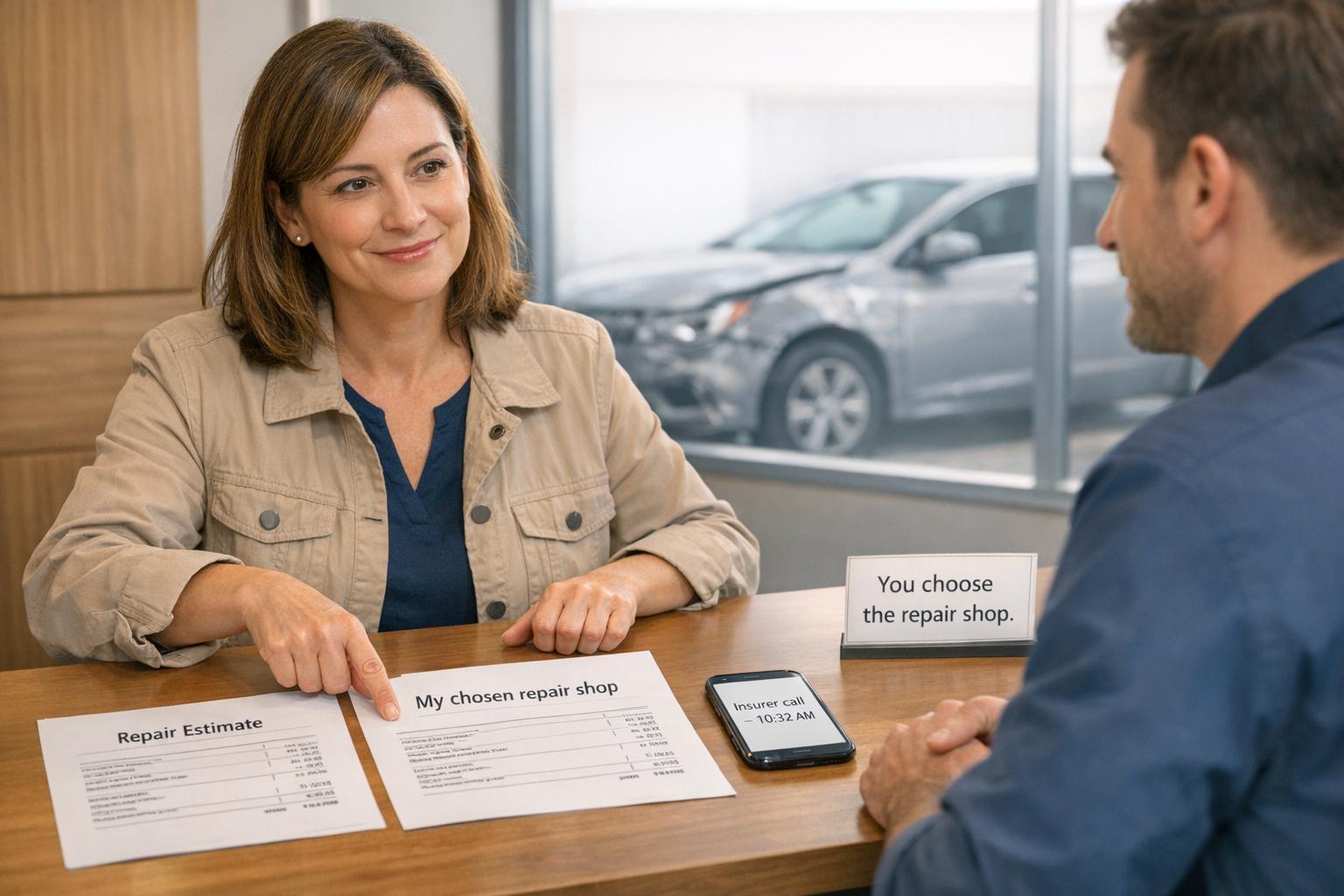
How to Avoid Insurance Steering
When dealing with car repairs after an accident, insurance companies may try to steer you toward their preferred repair shops. This practice, known as insurance steering, can lead to lower-quality repairs and compromise your vehicle's safety. Here's what you need to know:
- What is Insurance Steering? It's when insurers push you to use specific repair shops that often prioritize cost-cutting over quality.
- Why Insurers Do It: To save money through agreements with repair shops for discounted labor and parts.
- Your Rights: You have the legal right to choose any repair shop, and insurers cannot deny your claim based on your choice.
- How to Protect Yourself: Consult car accident guides, Review your policy, get multiple repair estimates, document all communications with your insurer, and research repair shops independently.
Stay vigilant for tactics like warranty scare claims, financial intimidation, or processing delay threats. If you feel pressured, request written confirmation of statements and seek professional help if needed. Protect your rights and ensure your vehicle gets proper repairs.
How to Recognize Insurance Steering
Insurance companies often use subtle tactics to direct you toward insurance preferred shops. Being able to identify these strategies is key to ensuring you exercise your right to choose any repair shop you prefer.
Common Insurer Tactics
Here are a few ways insurers may try to influence your decision:
- Warranty Scare Tactics: An adjuster might say they can’t guarantee the repair work unless you use one of their "preferred" shops. This claim is misleading since most independent repair shops already offer lifetime warranties on their repairs.
- Financial Intimidation: Insurers may warn that choosing a non-network shop could leave you paying out-of-pocket expenses or covering differences in labor rates. However, insurers are typically obligated to pay reasonable and customary charges for the shop you select.
- Processing Delay Claims: Some adjusters might suggest that using an independent shop will cause unnecessary delays in processing your claim or completing repairs. These claims are often exaggerated, as quality repairs naturally take time.
- Convenience Traps: After events like hailstorms, insurers may set up "claims drive-through centers" at their preferred shops. At these centers, adjusters might introduce you directly to the shop’s manager, encouraging you to schedule repairs while you’re still feeling the urgency of the situation.
These tactics often hint at deeper steering efforts. Stay alert for additional warning signs.
Warning Signs to Watch For
If you notice vague language or unclear explanations that discourage you from making an independent choice, it’s a red flag. For example, if an insurer says, "we recommend" without providing specific reasons, ask for written confirmation of their statements.
Another red flag is discouraging independent estimates. If your insurer advises against getting multiple quotes, they may be trying to limit your options.
California Insurance Code Section 758.5 explicitly protects your rights in this regard:
"Insurance companies cannot legally require policyholders to use a specific automotive repair dealer, or suggest that coverage is dependent on utilizing specific repair facilities."
If an insurer makes claims about warranties, delays, or costs, ask them to provide their statements in writing. This simple step can help you push back against steering tactics.
sbb-itb-6a9d141
Your Rights as a Policyholder
Did you know that the law protects your freedom to choose any qualified repair shop? By understanding these legal safeguards and the details of your insurance policy, you can confidently push back against steering tactics.
Your Right to Choose Any Repair Shop
You have the legal right to select any qualified auto repair shop for your vehicle. Insurance companies cannot force you to use a specific repair facility.
Many states have anti-steering laws in place to protect this choice. For instance, Texas Insurance Code Section 1952.301 explicitly states:
"An insurer may not directly or indirectly limit the insurer's coverage under a policy... by limiting the claimant of the policy from selecting a repair person or facility to repair damage to the vehicle."
Similar protections are in effect in states like California and Minnesota. Your insurer cannot reduce or deny your claim simply because you choose an independent repair shop instead of one from their preferred network. If an insurance adjuster makes statements about delays or guarantees tied to specific shops, ask for written confirmation to address any illegal steering practices. Reviewing your policy is another way to ensure your rights are respected.
Review Your Policy Coverage Details
Taking time to understand your policy gives you more control over your repair options. Look closely at the repair clauses - especially those related to "reasonable and customary" charges. Insurers are required to cover these costs regardless of which repair shop you choose.
In states like California, insurers are obligated to provide an "Auto Body Repair Consumer Bill of Rights" when you apply for a policy or after reporting an accident. This document spells out your rights regarding repair shop selection, independent estimates, and parts usage. If you're in California and haven’t received this document, make sure to request it from your insurer.
Keep a detailed record of all communications with your insurance company. By knowing your legal rights and staying informed about your policy, you can effectively counter steering attempts and ensure your vehicle gets the quality repairs it deserves - at the shop you trust.
How to Avoid Insurance Steering
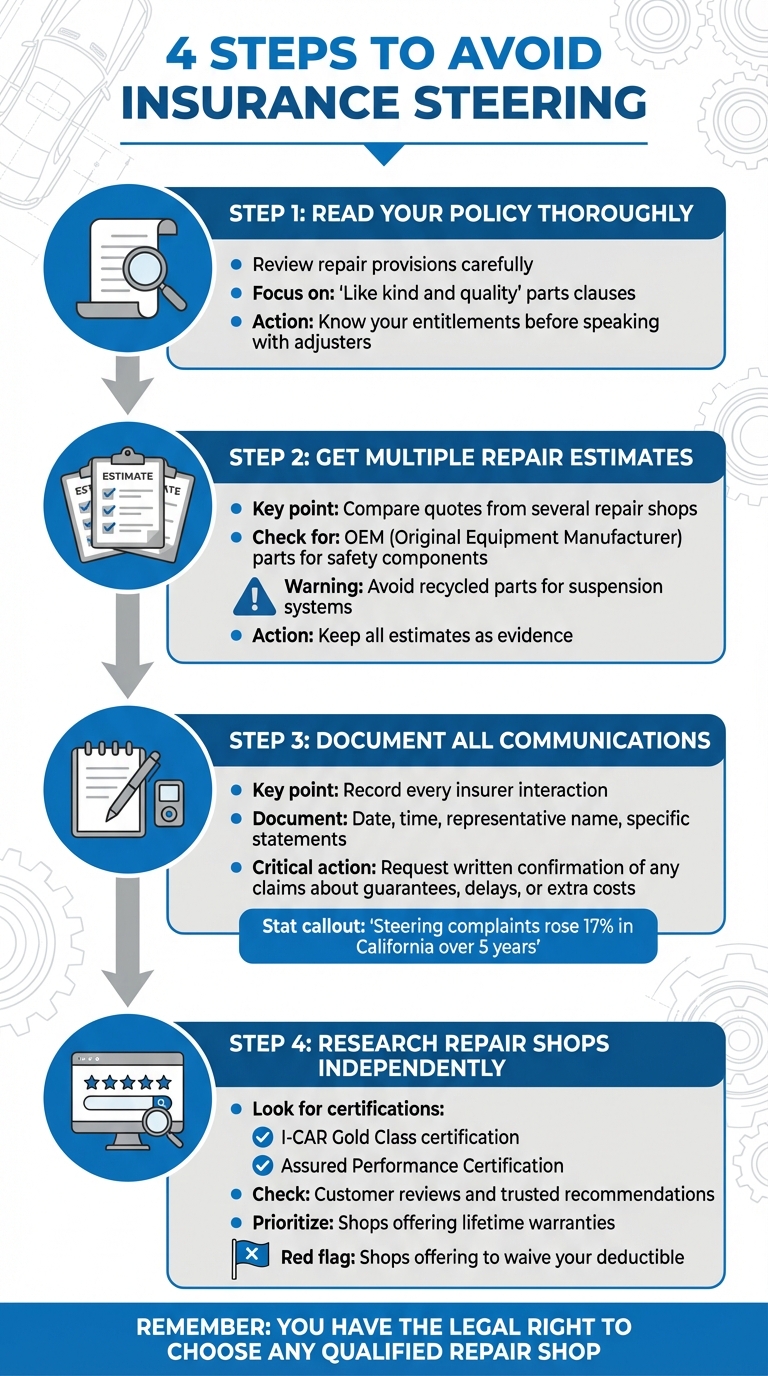
4-Step Guide to Avoiding Insurance Steering Tactics
Now that you’re aware of your rights, let’s focus on practical steps to protect yourself from steering tactics. These measures will help you stay in control of your vehicle repairs and ensure quality outcomes.
Read Your Policy Thoroughly
Start by carefully reviewing the repair provisions in your insurance policy. Pay close attention to clauses about "like kind and quality" parts, which outline your entitlement to replacements that restore your vehicle to its pre-loss condition. Knowing these details beforehand can prevent you from feeling pressured by an adjuster. Additionally, independently verify repair costs by gathering several estimates from trusted repair shops.
Get Multiple Repair Estimates
Seek quotes from several repair shops to compare labor rates and the quality of parts they use. When reviewing these estimates, ensure the shop uses OEM (Original Equipment Manufacturer) parts for critical structural and safety components. Recycled parts, especially for suspension systems, can sometimes be unsafe and compromise your vehicle’s integrity. Keep all estimates as evidence of reasonable repair costs, especially if your insurer disputes the charges or declares the vehicle a total loss. This process not only confirms fair pricing but also ensures adherence to safety and quality standards.
Keep Detailed Records of Insurer Communications
Documentation is your best defense against steering. Record every interaction with your insurer, noting the date, time, representative’s name, and any specific statements - especially those mentioning guarantees, delays, or added costs for using independent shops. If an adjuster claims there will be delays or extra expenses, request written confirmation immediately. According to the California Bureau of Automotive Repair, such requests often discourage steering tactics right away. It’s worth noting that steering complaints to the California Department of Insurance rose by 17% over five years, highlighting the importance of staying vigilant.
Do Your Own Research on Repair Shops
Take the time to research repair facilities independently. Look for shops with I-CAR Gold Class certification, which indicates technicians are trained in areas like Non-Structural, Estimator, Refinish, and Steel Structural repairs. Shops with Assured Performance Certification are also worth considering, as they meet strict standards for tools, equipment, and training. Read customer reviews and ask for recommendations from people you trust. Prioritize shops that provide lifetime warranties, as this guarantees their work quality - an assurance from the shop itself, not the insurance company. Be cautious of shops offering to waive your deductible, as this could signal fraudulent practices or subpar repairs.
When to Get Expert Help
Situations That Require Professional Help
Sometimes, dealing with insurers can go beyond frustrating - it can feel downright intimidating. If you notice tactics like insurers claiming they won't honor repairs at your chosen shop, threatening to void warranties, or insisting you'll have to pay extra unless you use their "Preferred Network Shop", it may be time to call in the experts. These actions, especially if documented, are red flags that professional guidance is needed.
"If an insurer misrepresents facts, uses an unreasonable estimate, or fails to fairly evaluate competing estimates, that conduct can support claims under... unfair or deceptive trade practices law." - Pierce Law Group
Another scenario requiring professional help is when insurers push your repair shop to use lower-quality or "knock-off" parts instead of OEM components. If they persistently resist or even threaten to deny coverage, it's time to seek advice. Additionally, if your mechanic's estimate is significantly higher than the insurer's - known as an amount-of-loss dispute - you might need to turn to your policy's appraisal clause or consult legal counsel. These steps help ensure you don’t have to compromise on the quality of your vehicle's repairs.
How Collision Help Can Assist You
When insurers cross the line from pressure to outright steering, having professional support can make all the difference. Collision Help | Nationwide Accident Help is a resource designed to guide you through the claims process. By uploading photos of your vehicle damage, you can receive expert evaluation and tailored advice within 24 hours.
This service provides a personalized plan to address your specific challenges, whether it’s disputes over repairs, total loss disagreements, or aggressive steering tactics. Their expertise ensures your car is repaired following manufacturer-approved methods using OEM parts, steering clear of the lower-quality alternatives often pushed by insurer-preferred shops. If you suspect illegal practices - like shops offering to "bury the deductible" or engaging in airbag fraud - you can also report them to the National Insurance Crime Bureau (NICB) at 800-835-6422.
Conclusion: Protect Your Rights and Get Quality Repairs
Knowing your rights and understanding how insurance steering works can make a big difference when it comes to getting quality repairs for your vehicle. Insurance steering has been illegal since the 1963 Federal Consent Decree. Yet, it's still an issue - steering complaints in California alone rose by 17% over just five years. Recognizing the red flags can help you push back against these practices.
You have a legal right to choose any repair shop. If an adjuster claims your chosen shop's work isn’t guaranteed or suggests delays if you go with an independent repair facility, ask them to put that in writing. This simple step often stops illegal steering tactics in their tracks. Keep in mind, warranties come from the repair shop, not the insurance company.
To protect yourself further, take a few proactive steps: review your policy's "like kind and quality" provisions, document all communications with your insurer, and gather multiple repair estimates along with recommendations from trusted repair shops.
If you find yourself in a dispute or feel pressured, don’t hesitate to seek professional help. This is especially important if you need to negotiate a total loss settlement after a severe accident. Platforms like Collision Help | Nationwide Accident Help offer expert evaluations within 24 hours after you upload photos of your vehicle damage. This guidance can help you navigate claims and make confident repair decisions.
Your vehicle’s safety and value shouldn’t be compromised by insurer tactics. By staying informed, standing your ground, and seeking expert advice when necessary, you can ensure your car gets the care it needs.
FAQs
What should I say if my adjuster insists I use a preferred shop?
If your insurance adjuster pushes you toward a specific repair shop, stand firm and exercise your legal right to select your own facility. In many states, laws are in place to protect this choice, and insurers are not allowed to demand or pressure you into using a particular shop. Politely let the adjuster know that opting for a different repair shop won’t impact your insurance coverage. If the pressure persists, calmly remind them of your rights. Should the situation escalate, seeking legal advice might be a good next step.
Can my insurer legally pay less if my shop charges more?
No, your insurer cannot legally pay less just because your repair shop charges more. They are generally required to cover reasonable repair costs. On top of that, insurers pressuring you to use a specific repair shop - or trying to steer you away from your preferred choice - is often against the law.
How do I prove I’m being steered to a specific repair shop?
To address insurance steering, it's critical to document everything. Record any misleading or coercive statements your insurer makes, and keep a detailed log of all communications, including dates, times, and summaries of what was discussed. Pay close attention to any pressure tactics they use to influence your decisions. Since these practices are illegal in many states, having clear and thorough evidence can be essential in protecting your rights.