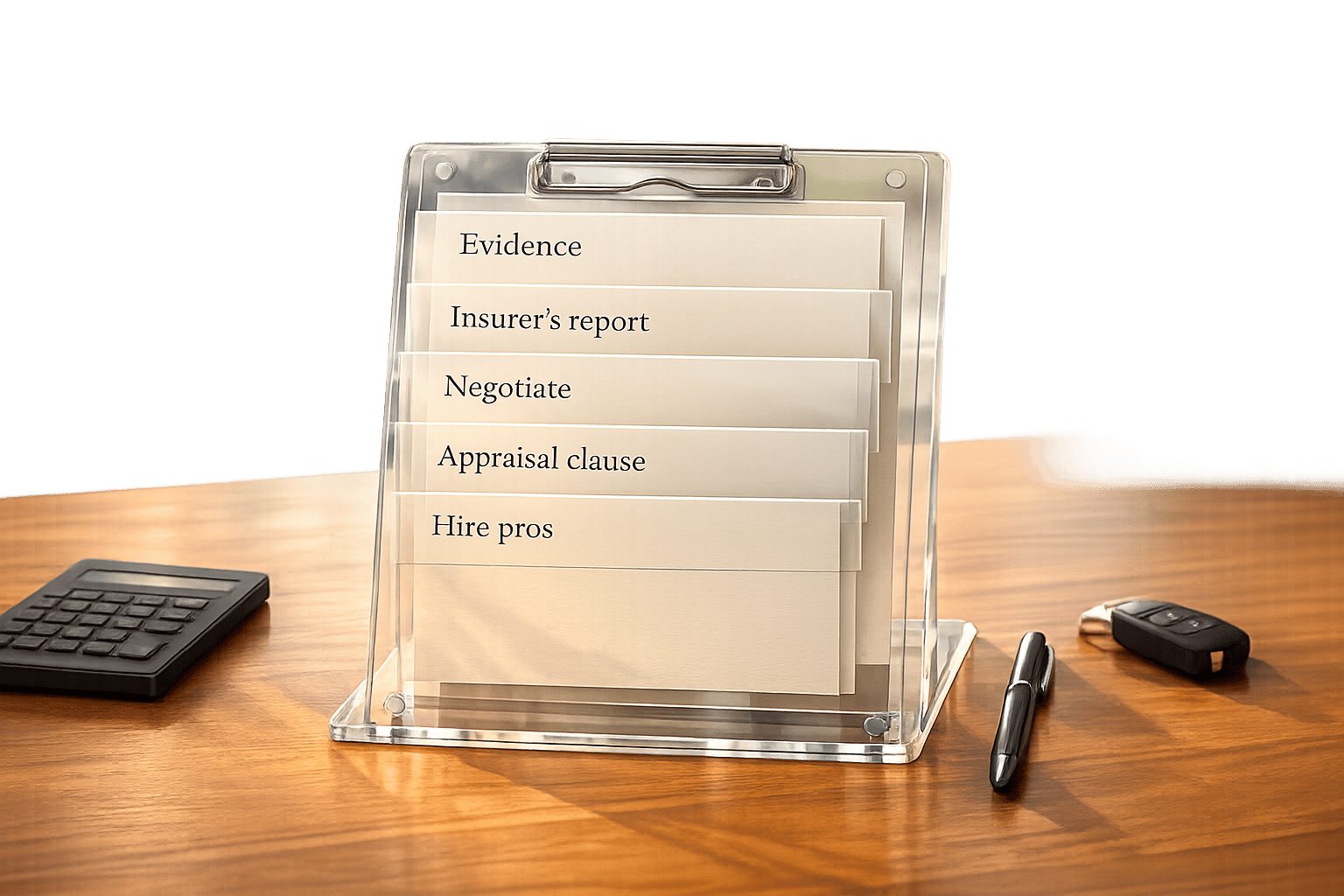
How to Appeal a Total Loss Decision
When your car is declared a total loss by your insurer, it doesn’t always mean they’ve assessed it correctly. Insurance companies often rely on automated systems that can undervalue your car by thousands of dollars. If you believe their valuation is unfair, you can challenge it. Here's how:
- Understand Total Loss: Insurers declare a total loss when repair costs exceed 51%-80% of the car’s pre-accident value (varies by state).
- Common Errors: Insurers may undervalue your car by using outdated data, ignoring upgrades, or misclassifying your vehicle.
- Gather Evidence: Collect maintenance records, receipts for upgrades, pre-accident photos, and independent appraisals to support your case.
- Request the Valuation Report: Ask for a detailed breakdown from the insurer to identify errors in their calculations.
- Negotiate: Use your evidence to dispute inaccuracies and push for a fair settlement.
- Escalate if Needed: Invoke the appraisal clause in your policy or file a complaint with your state’s insurance regulator.
- Seek Professional Help: If disputes persist, consider hiring a public adjuster or attorney.
Challenging a total loss decision can save you thousands, but it requires preparation and persistence. Always document everything and don’t settle until you’re satisfied with the offer.
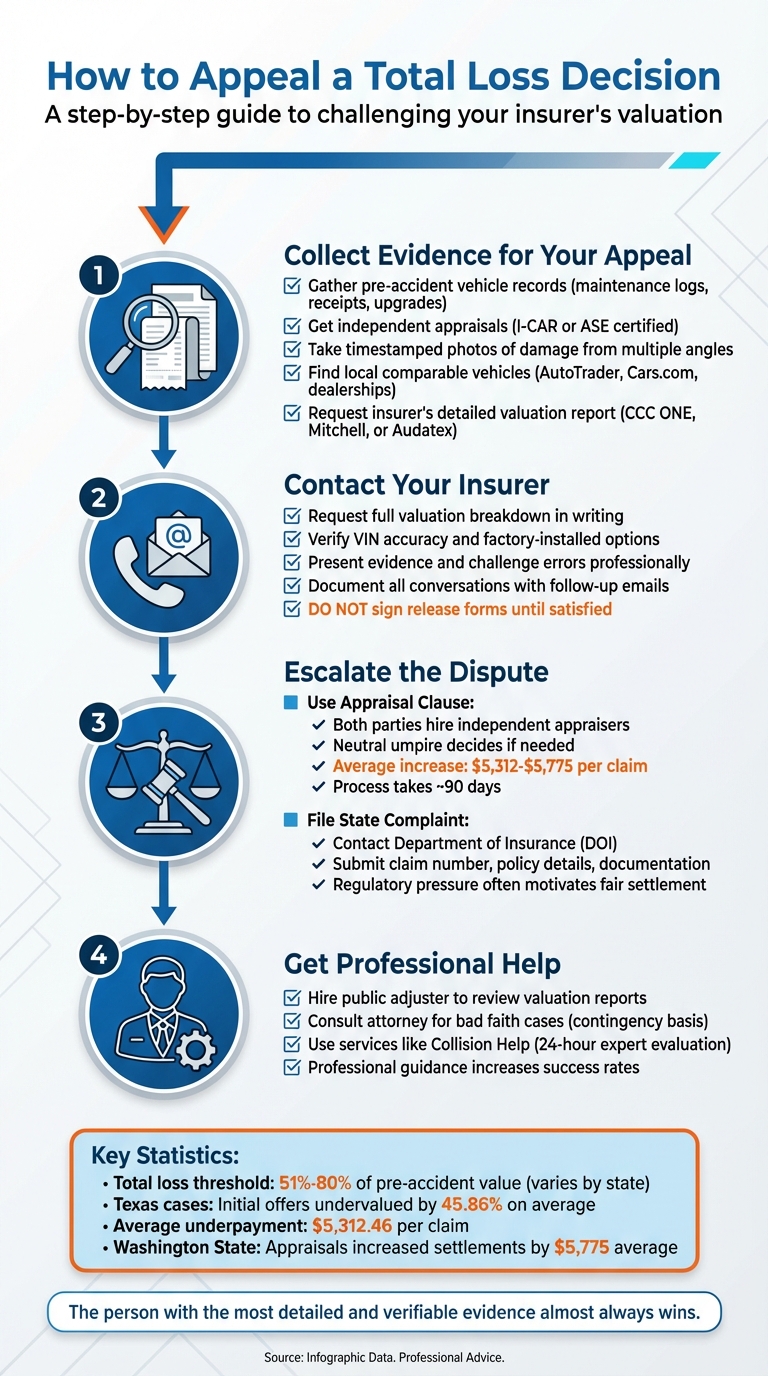
4-Step Process to Appeal a Total Loss Car Insurance Decision
Negotiating The Total Loss Value of Your Vehicle After an Accident
sbb-itb-6a9d141
Step 1: Collect Evidence for Your Appeal
To begin your appeal, request the insurer's detailed valuation report (such as one from CCC ONE or Audatex). This report will help you identify the specific evidence needed to support your case and understand how insurance calculates total loss. Here’s how to gather everything effectively.
Gather Pre-Accident Vehicle Records
Your vehicle's maintenance history can demonstrate that it was in excellent condition before the accident. Collect service logs that show routine maintenance and any upgrades. Receipts for recent improvements - like new tires, a fresh battery, or a replaced transmission - can highlight added value that automated systems may miss.
The original window sticker (also called the Monroney sticker) is another crucial piece of evidence. It lists all factory-installed features and trim packages, ensuring that premium options like advanced technology or high-end sound systems are properly considered. A clean Carfax or AutoCheck report can confirm an accident-free history, which supports a higher valuation. Pre-accident photos of the car’s exterior and interior can also help you dispute any deductions for wear and tear.
Get Independent Appraisals
If your records don’t fully support your claim, consider hiring a certified independent appraiser. These professionals, especially those with I-CAR or ASE certifications, can provide an accurate Fair Market Value for your vehicle based on local market data. An independent appraisal can serve as a strong counter to the insurer's valuation.
You can also search local dealership websites, AutoTrader, and Cars.com for comparable vehicles. Look for listings that match your car’s year, make, model, trim, and mileage. Save screenshots that include the VIN and asking price to ensure the comparables are credible. This step is vital because insurers may reference vehicles from distant areas with lower prices or different features, which could skew the valuation unfairly.
Take Photos of the Damage
Photos are essential for challenging claims of pre-existing damage or unfair condition ratings. Take clear, timestamped photos of the damage on the day of the accident. Capture images of the entire vehicle from multiple angles to show the full scope of the damage, not just the main impact area.
Additionally, take close-up shots of the dashboard, infotainment system, and upholstery to confirm specific trim details and optional packages that might otherwise be overlooked. If you have pre-accident photos, include them to emphasize your vehicle’s excellent condition and dispute any assumptions of average wear and tear.
With all your evidence in hand, you’ll be ready to present a strong case to your insurer.
Step 2: Contact Your Insurer
Once you've gathered all your evidence, it's time to reach out to your insurer. Be clear in your communication and make sure to document every interaction for future reference.
Request the Valuation Breakdown
Ask your insurer for a full copy of the valuation report, and do this in writing - email works best. These reports, often created using tools like CCC ONE, Mitchell, or Audatex, provide a detailed breakdown of how they calculated your car's value. Think of this as their "playbook", revealing the exact data points they relied on.
When you receive the report, go over it carefully. Double-check the VIN to ensure it's completely accurate - just one wrong digit could lead to your car being valued as a lower-grade model. Confirm that all factory-installed options are listed correctly. Then, take a close look at the comparable vehicles (or "comps") used in the valuation. Are they from your local market, or were they pulled from areas with different pricing trends? Lastly, review any deductions for "pre-existing damage" or "wear and tear." Automated systems often default to "average" ratings based on your car's age, ignoring its actual condition and maintenance history.
This breakdown will complement the evidence you prepared in Step 1 and give you a stronger position during negotiations.
Present Your Evidence and Negotiate
Use your evidence to point out and challenge any errors in the insurer's valuation. A good way to organize your argument is by creating a spreadsheet of local comparable vehicles. Include key details like VINs, asking prices, mileage, and their distance from your location. This shows you're thorough and have done your research.
"Negotiation isn't an unexpected conflict. It's a built-in part of the system that you can prepare for." - SnapClaim
When speaking with the adjuster, stick to the facts. For example, you could say, "The comparable vehicles in your report don't accurately match my car's trim level", or, "Can you point out where my data is incorrect?" Keep the conversation professional and avoid emotional arguments. If the adjuster insists their software's valuation is final, calmly request a supervisor review or ask a claims manager to review your evidence.
After every phone call, follow up with a summary email to document what was discussed. Never sign a release form or transfer your vehicle's title until you're completely satisfied with the settlement offer. Signing too soon could waive your right to negotiate further. If the insurer offers a small increase, like $200–$500, compare it against your independent appraisal to ensure it reflects the actual market value. These small offers are often just an attempt to close the case quickly.
"The person with the most detailed and verifiable evidence almost always wins. Your records are far more accurate than an insurer's generic data." - SnapClaim
If your efforts still don't result in a fair settlement, you'll need to escalate the dispute. The next step will guide you through that process.
Step 3: Escalate the Dispute
If negotiating with your insurer and presenting evidence still doesn't lead to a fair settlement, it might be time to escalate the dispute. Auto insurance policies include provisions to protect you when standard claims negotiations hit a dead end.
Use the Appraisal Clause
The appraisal clause is a common feature in most auto insurance policies, offering a way to challenge your insurer’s valuation through an independent process. This clause is specifically for disputes over your vehicle’s Actual Cash Value (ACV) vs. replacement cost and does not apply to disagreements about coverage or fault.
Here’s how it works: You and your insurer each hire an independent appraiser, and both appraisers work to determine the ACV. If they can’t agree, a neutral umpire is brought in, with costs split evenly between you and the insurer. The final decision becomes binding once two of the three parties - either both appraisers or one appraiser and the umpire - agree on the valuation.
"The appraisal clause isn't an aggressive move. It's a contractual tool designed for fair dispute resolution. Invoking it is simply exercising a right you already have in your policy." - SnapClaim
The results of invoking the appraisal clause can be eye-opening. For example, in Texas, a review of 46 cases showed that initial insurance offers were undervalued by an average of 45.86%, equating to $5,312.46 per claim. Similarly, in Washington State, using the appraisal process increased total loss settlements by an average of $5,775 per claim.
Timing is crucial. You must activate the appraisal clause before cashing or signing the settlement check, as doing so often waives your right to dispute the valuation. To get started, submit a written demand to your insurer, stating that you are invoking the appraisal clause and naming your chosen appraiser. Ensure your appraiser holds recognized certifications, such as IACP or I-Car Platinum, to make their report credible and defensible.
Typically, the entire process takes about 90 days from the time you submit your written demand to the final decision.
If the appraisal process still doesn’t result in a fair settlement, the next step is to involve state regulators.
File a Complaint with State Regulators
When your insurer is acting in bad faith, delaying the process, or violating state laws, you can escalate the issue by filing a complaint with your state’s Department of Insurance (DOI) or Department of Financial Services. These agencies ensure insurers comply with state regulations and operate in "good faith". Unlike the appraisal clause, which focuses on valuation disputes, a state complaint addresses unfair practices or illegal behavior by the insurer.
"A formal inquiry from a state regulator often motivates insurers to resolve disputes fairly." - SnapClaim
Before turning to state regulators, make sure you’ve exhausted your insurer’s internal appeal process. Notify your agent or adjuster, provide any additional evidence, and request a resolution. If that doesn’t work, document everything - communication logs, evidence, and any responses from the insurer.
When filing a complaint, include your claim number, policy details, detailed communication records, and supporting documents such as independent appraisals, maintenance records, and police reports. The state will investigate whether the insurer acted unfairly or violated policy terms. Often, the threat of regulatory scrutiny encourages insurers to settle disputes more fairly to avoid further investigation.
Step 4: Get Professional Help
When you've tried the appraisal clause and filed complaints with state regulators but still face pushback from your insurer, it may be time to bring in professional help.
When to Hire an Attorney or Public Adjuster
If you've gone through direct appeals and independent evaluations without success, public adjusters can be a game-changer. These professionals specialize in reviewing insurer valuation reports, often spotting errors that could be reducing your payout. They understand the intricate language of insurance policies and can effectively negotiate a total loss settlement. For example, they’ll carefully examine factors like trim levels, missing premium features, mileage discrepancies, or unfair condition adjustments.
Once you provide a certified independent appraisal, the insurer has to justify why their valuation is more accurate than the objective, market-based assessment you’ve presented. This shifts the dynamic, signaling that you’re serious and ready to escalate if necessary.
If your claim involves serious injury or if the insurer is acting in bad faith - such as delaying, deceiving, or outright refusing fair negotiations - it’s time to consult an attorney. Many attorneys operate on a contingency basis, meaning they only get paid if they win your case. Sometimes, the mere possibility of litigation is enough to push insurers toward a fair settlement.
Even with professional help, if you’re still unsure about your next move, seeking additional expert guidance can provide clarity.
Get Expert Guidance from Collision Help
For added support, Collision Help offers nationwide assistance tailored to cases like yours. This service simplifies the process of getting expert advice, eliminating the hassle of finding local professionals or navigating legal complexities alone.
By uploading photos of your vehicle's damage on their website, you can receive expert advice and a detailed action plan within 24 hours. The initial evaluation is free, giving you a clear understanding of your options.
Having solid, data-backed evidence is essential in total loss disputes. Services like these provide certified, independent appraisal reports that turn negotiations into factual discussions instead of subjective debates. These reports ensure your vehicle is valued based on actual replacement costs in your local area - typically within a 50- to 100-mile radius - rather than relying on broader regional data that might undervalue your car.
"The person with the most detailed and verifiable evidence almost always wins." - SnapClaim
Whether you’re trying to decipher your insurer’s valuation, gathering critical evidence, or deciding how to escalate, professional guidance can save you time, money, and a lot of unnecessary stress.
Conclusion
Challenging a total loss decision requires a strategic approach. Success often hinges on thorough preparation, persistence, and knowing when to bring in expert assistance.
Start by gathering solid evidence about your vehicle's condition. Request the full valuation report, collect maintenance records, find local comparable vehicles, and document any upgrades. Armed with this information, you can turn the conversation into a fact-driven negotiation. Keep in mind, valuation errors and total loss threshold discrepancies happen more often than you'd think.
If negotiations stall, consider invoking the appraisal clause or filing a complaint with your state insurance regulator. These steps are designed for situations like this. For example, in Washington State, independent appraisals have been shown to increase settlement awards by an average of $5,775 per claim.
When disputes reach a standstill or the insurer refuses to compromise, don't hesitate to seek professional help. Whether it's a public adjuster, an attorney, or a service like Collision Help - which offers expert guidance within 24 hours after reviewing photos of your vehicle - having seasoned professionals on your side can shift the balance of power in your favor.
FAQs
What proof increases my total loss payout the most?
To boost your total loss payout, you need to present solid evidence that shows your vehicle's worth before the accident. This could include independent market value research, records highlighting the car's condition, and documents that justify a higher valuation. Details such as your car's fair market value and its maintenance history can make a big difference in building a stronger case for a better payout.
How do I spot mistakes in the insurer’s valuation report?
When you get an insurer’s valuation report, it’s important to go through it with a fine-tooth comb. Start by checking for errors in the vehicle data - is the make, model, year, and trim level correct? Even small inaccuracies can skew the valuation.
Next, consider whether the report reflects current regional market trends. If local demand or pricing patterns aren’t factored in, the valuation might not match what your car is actually worth in your area.
Don’t forget to look for unique features or upgrades your vehicle has. Things like a premium sound system, custom wheels, or advanced safety features can significantly add to its value.
Finally, verify whether the report takes into account your car’s true condition and mileage. An unusually low mileage or excellent maintenance history should boost the valuation. Catching these omissions or errors gives you a stronger case to challenge an undervalued report.
Will invoking the appraisal clause delay my settlement?
Invoking the appraisal clause allows you to challenge your insurer’s valuation of a total loss by bringing in an independent appraiser. However, keep in mind that this process can slow down your settlement. It may involve formal disputes, further evaluations, or even arbitration. While it can be a useful tool to contest a low valuation, think carefully about whether the possible delays fit with your priorities before moving forward.